Why We Are Building a Demand Network for Metalworking on HiggX
By Wim Dijkgraaf, Founder & CEO of Quotation Factory
A lot of companies are working hard to digitalize their factory, while the process around the factory still runs through email, spreadsheets, phone calls, and manual follow-up.
That gap matters more than most people think.
In metalworking, the real bottleneck is often not production itself. It is everything that happens before and around production: interpreting an inquiry, preparing a quotation, involving suppliers, aligning lead times, and keeping everyone informed once work is in motion.
That is exactly why we are building our upcoming demand-network solution on the HiggX platform.
The problem is not just slow quoting
When people hear about Quotation Factory, they often assume we are only solving quotation speed.
That is part of it, but it is not the full story.
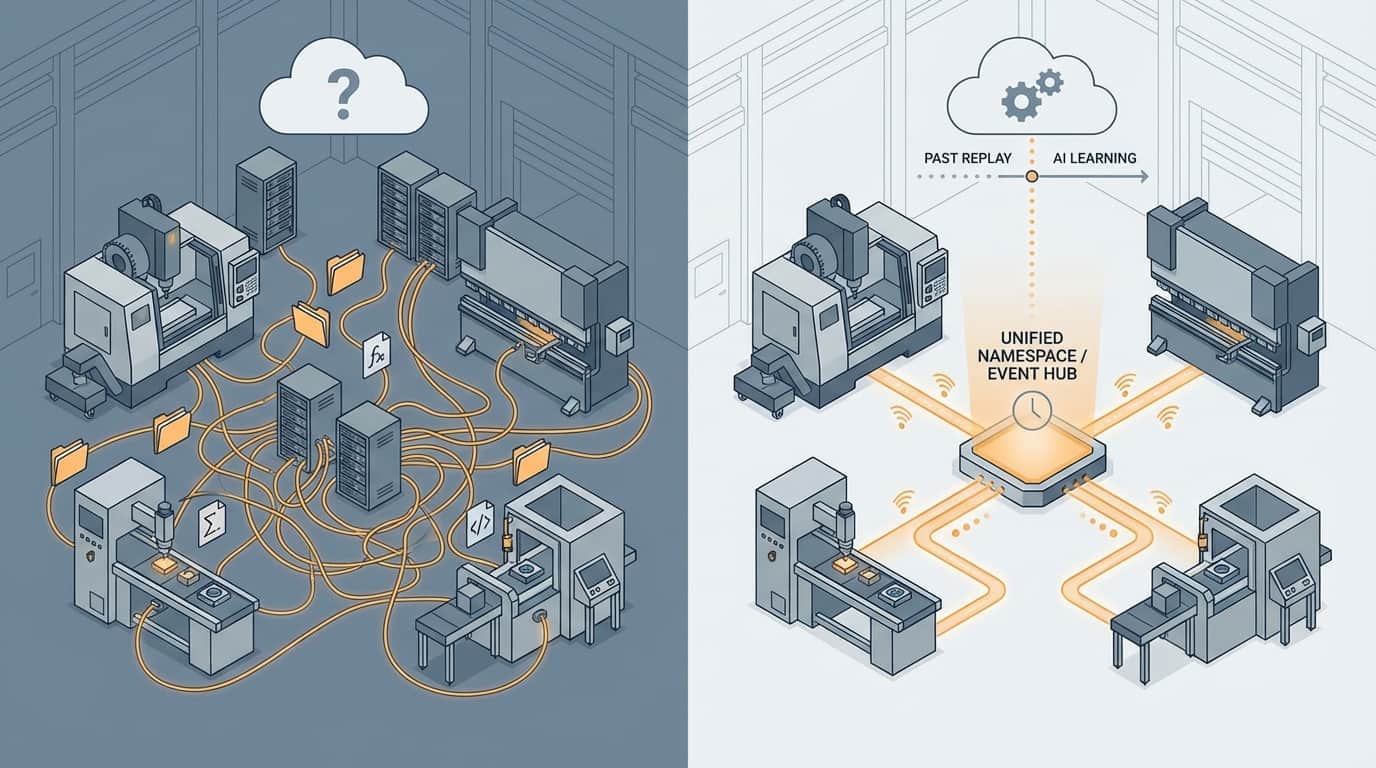
The deeper issue is that most technical supply chains still depend on manual translation between companies. A customer sends an RFQ. A supplier interprets it. That supplier may need another supplier for laser cutting, bending, machining, or surface treatment. Then the same translation work starts again one layer deeper in the chain.
The workflow is familiar to anyone in this industry:
- drawings and 3D models arrive in different formats
- teams interpret specifications manually
- subcontractors are contacted one by one
- quotations are compared in separate tools
- commitments on lead time remain hard to verify
- progress updates are shared late, inconsistently, or not at all
Most companies do not have a machine problem there. They do not even have an ERP problem first.
They have a coordination problem. More specifically: they have a translation problem between commercial intent, technical reality, and supply-chain execution.
The same process keeps repeating, but the industry still treats it as custom work
One of the ideas behind HiggX is very simple: many interactions between companies in metalworking are structurally the same, even when the parties and roles change.
A company can be a selling party in one transaction and a buying party in the next.
A metalworking company receives an RFQ from its customer. In that moment, it acts as the selling party within a buying process. Then the same company outsources part of the work to a supplier. Now the role changes, and it becomes the buying party.
Different parties. Different context. Same underlying process.
That is why we chose to model this around UBL, the Universal Business Language standard. UBL gives us a common language for process flow, document exchange, roles, and state transitions. It makes it possible to treat supply-chain interaction not as a collection of isolated emails, but as a structured digital process.
That distinction is important.
When the process is standardized, it can be automated. When it can be automated, it becomes observable. When it becomes observable, it becomes manageable.
Why I prefer the term demand network over supply chain
I intentionally use the term demand network.
"Supply chain" suggests a linear sequence. In reality, that is not how these relationships work. Metalworking is a network of companies that continuously connect, switch roles, exchange commitments, and coordinate capacity.
A graph is a better model than a chain.
The other reason is that the process usually starts with demand. A customer need triggers the whole sequence. That demand then moves through the network, where multiple parties contribute to turning it into a delivered product.
So for me, "demand network" is not a marketing term. It is a more accurate description of what is actually happening.
What we are building on HiggX
At Quotation Factory, we already help metalworking companies automate the front part of the process: understanding inquiries, transforming engineering data into manufacturing-ready structures, generating quotations faster, and preparing work with much less manual effort.
That creates value on its own. Companies quote faster, work more consistently, and depend less on individual experience alone.
But we have been moving toward a bigger idea for some time.
The next step is to connect those quoting and work-preparation capabilities to structured interaction between companies in the network.
That is what the upcoming demand-network solution on HiggX is about.
In practical terms, this means a few things.
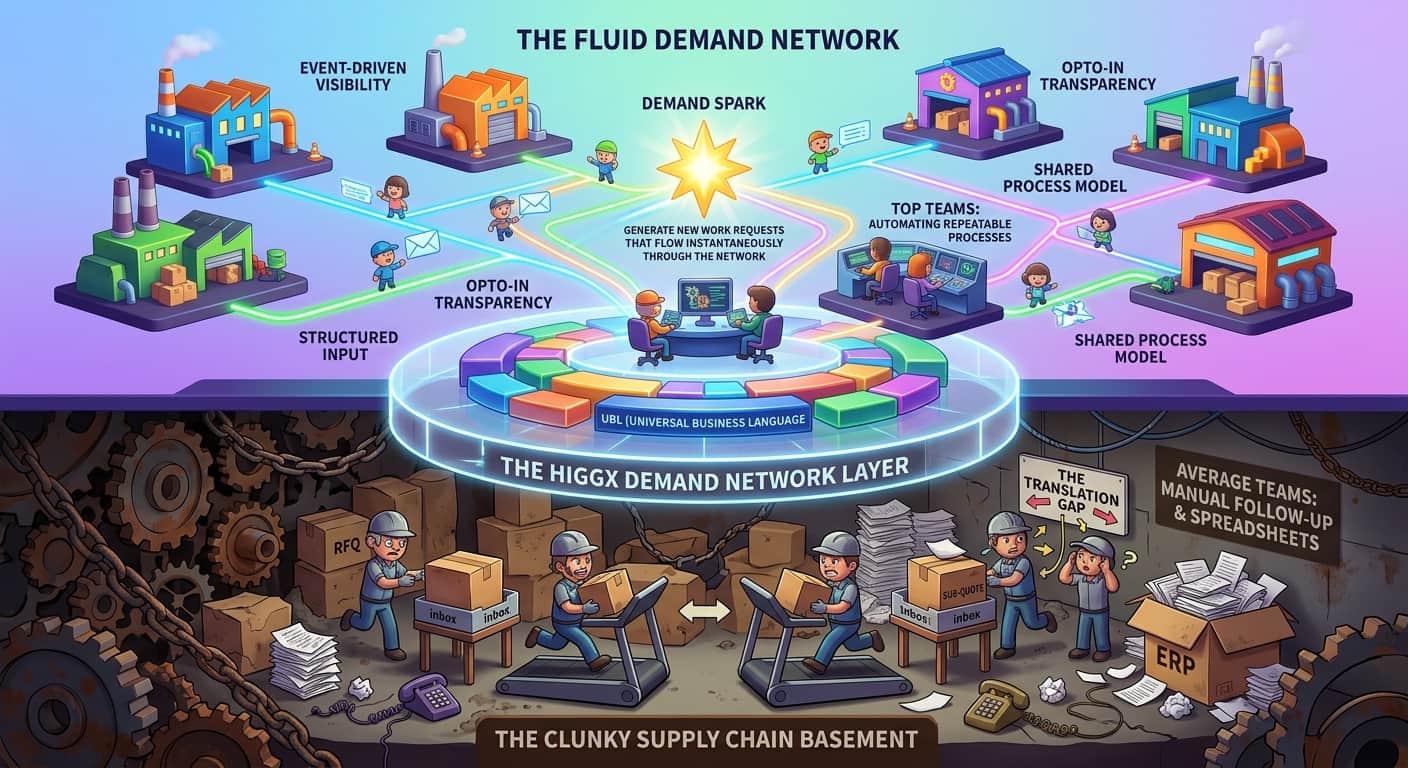
First, companies can interact through a standardized workflow based on buying and selling roles. Requests, quotations, order commitments, and status changes become part of one shared process model instead of disconnected communication.
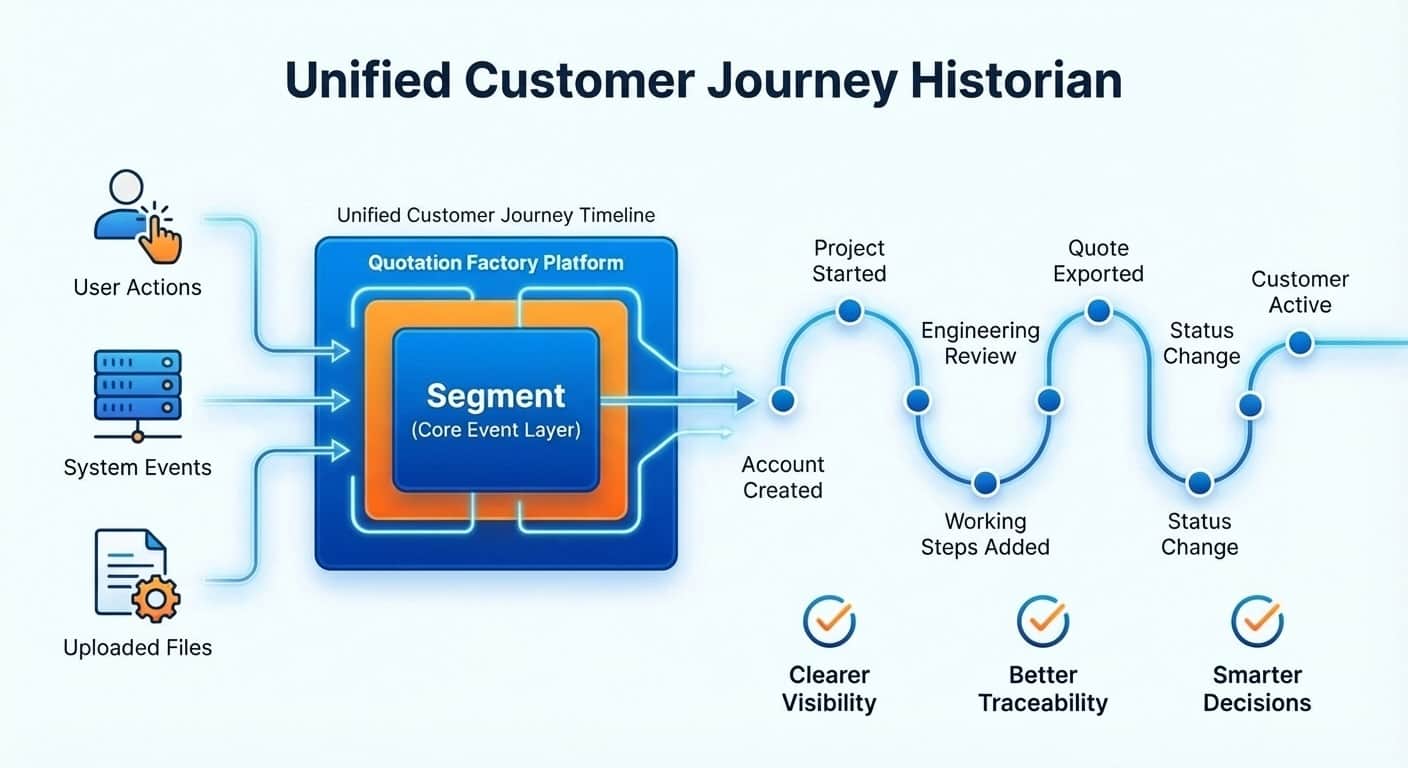
Second, those interactions become event-driven. Every important process step - for example, RFQ sent, quote received, order confirmed, production started, packaging started, shipment in transit, delivered - can be stored as an event in a historical log.
Third, companies can decide how much transparency they want to give each other. Through an opt-in and opt-out mechanism, parties in the network can subscribe to relevant events and share only what supports the relationship.
That matters because trust in a supply network is not created by promises alone. It is strengthened when promises become visible as process signals.
The mechanism behind the value
I believe the real opportunity is not just faster communication. It is better coordination through structure.
Here is the causal chain as I see it:
When commercial and technical input is structured,
quoting becomes more predictable.
When quoting becomes more predictable,
outsourcing within the network can be handled in the same way.
When network interaction follows a standard process,
documents, commitments, and state changes become machine-readable.
When those changes are captured as events,
companies gain visibility into what is happening across the network.
When visibility improves,
buyers can react earlier, suppliers can prepare sooner, and both sides reduce avoidable surprises.
That is the system we are building toward.
Not another inbox. Not another portal full of disconnected messages. A shared process layer for demand flowing through the metalworking network.
Why this matters before the ERP stage
One important design choice is that this interaction should happen before the traditional ERP handover.
That may sound counterintuitive, but in many companies it is exactly the messy pre-ERP phase that causes the most friction. The inquiry must be understood. The quote must be built. Suppliers must be involved. A manufacturable path must be defined. Prices and routing choices must be aligned.
Only when the commitment is real does it make sense to synchronize that result into ERP as a sales order or purchasing flow.
So instead of forcing ERP to manage all early-stage supply-chain interaction, we are designing a digital layer specifically for the process that comes first.
That gives companies speed where they need speed, without breaking the systems they already rely on later in execution.
What top teams understand
Average teams try to patch the symptoms.
They chase updates manually. They call suppliers when deadlines become uncertain. They re-enter data into multiple systems. They depend on experienced people to keep the whole thing together.
Top teams do something else.
They structure input. They standardize the process where standardization is possible. They automate what repeats. They create transparency early enough to act on it.
That is the mindset behind both Quotation Factory and HiggX.
We are not trying to replace craftsmanship in metalworking. We are trying to remove avoidable friction around it.
My view on what comes next
I believe the metalworking industry needs more than isolated software tools.
It needs shared digital infrastructure that respects how companies actually work: independently, in different roles, with different systems, but inside the same economic network.
That is what we are building.
Quotation Factory handles the work preparation and quotation side. HiggX adds the network layer in which structured interaction between parties can take place. Together, that creates a path from inquiry to commitment to execution with far less manual translation in between.
This is still early, and over the coming weeks I will explain more about the architecture, the event model, and the practical use cases we are working on.
But the core idea is already clear:
If we want metalworking companies to respond faster, collaborate better, and scale without adding the same overhead again and again, we need to stop treating network coordination as informal side work.
It has to become part of the digital system.
That is why we are building a demand network on HiggX.